Category: Construction Costs
Why We Adjust Costs for PPP
The Transit Costs Project adjusts all construction costs for purchasing power parities. This means that, for example, a Chinese subway is converted into dollars not at the exchange rate of $1 = 6.7¥, but at the PPP rate of $1 = 4.2¥; this means that present-day Chinese subways look 1.5 times more expensive in our analysis than in analyses that use exchange rate values, and projects from 10 years ago look twice as expensive. I believe our choice is correct, and would like to explain why, since it has gotten some criticism from serious people, who’s prefer exchange rates.
Local costs
I started this comparing mature developed countries. The US and Europe have largely separate markets for construction, and so American work is almost entirely done in dollars and European work in euros (or pounds, or kronor, etc.). Japan is likewise very local and so is China. In that case, local costs matter far more than international ones.
But what’s interesting is that even in countries that use imported technology and international consultants and contractors and have low wages, costs are almost entirely local. I wrote about this last year, referencing an article out of India about the small cost impact of indigenization and an interview I made with a Philippine planner who told me 90% of the value of civil works is local. Rolling stock is internationally traded, but we exclude it from our cost estimates whenever possible.
The impact of currency changes
Using PPPs, if a country undergoes a bout of inflation, this should be reflected in changes in construction costs. This is intentional. The example given to me in the critique linked in the lede is that if Bangladeshi food prices rise, then this makes the PPP exchange rate look less favorable (a taka in Bangladesh can then buy less relative to a dollar in the US). But that’s fine – if Bangladeshi food prices rise then this forces Dhaka to pay higher wages to MRT construction workers, so overall it’s just domestic inflation. It’s no different from how, today, we’re seeing nominal construction cost growth in the United States and Europe because of high inflation.
At least the inflation today is moderate by any developing-country standard. Core inflation in the United States is 6%; in Germany it’s 3%. This may introduce third-order errors into the database as we deflate costs to the midpoint of construction. In contrast, 50-60% annual inflation is sustained over years in some middle-income countries like Iran, and then the choice of year for prices has significant impact, to the point that Iranian costs have a significant error bar. But that’s regardless of whether one adjusts for PPP or not, since usually inflation leads to deteriorating terms of trade.
In contrast, if prices are compared in exchange rate terms, then international fluctuations create fictitious changes in construction costs. When China permitted the renminbi to appreciate in the mid-2000s, this would have looked like an increase in costs of about 20% – but the costs of local inputs did not change, so in reality there was no increase in costs. The euro:dollar rate peaked around 1€ = $1.58 in 2008, before tumbling to 1€ = $1.28 in the financial crisis – but nothing material happened that would reduce European construction costs by 19% relative to American ones; right now it’s trading at 1€ = $1.05, but this again does not mean that construction in Europe is suddenly a third cheaper compared with in the US relative to 15 years ago.
Unusual currency values
Some patterns are systemic – richer countries have stronger currencies relative to PPP value than poor countries. But others are not, and it’s important to control for them. A currency can be weak due to the risk of war or disaster; the Taiwanese dollar is unusually weak for how rich Taiwan is, and this should not mean that Taiwanese construction costs are half what they really are. Or it can be strong or weak based on long-term investment proposition: investors will bid up the value of a currency in a country they expect to profit in in the long term, perhaps due to population growth coming from high birthrates or immigration, and this does not mean that today, it builds infrastructure more expensively.
In any of those cases, the unusual value of the currency really reflects capital availability. Capital for investment in Australia is plentiful, but this by itself does not raise its construction costs; capital for investment in Taiwan is scarce, but this certainly does not make it a cheap place to build infrastructure.
Foreign-denominated construction
In some peripheral countries with unstable currencies, costs are quoted in foreign currency – dollars or euros. Some Turkish contracts are so quoted, and this is also common in Latin America and sometimes Southeast Asia. But ultimately, the vast majority of the contract’s value is paid out in the local currency, not just labor but also locally-made materials like concrete. This creates a weird-looking statistical artifact in which we convert dollars or euros to local currency in exchange rate terms and then back in PPP terms.
This, we do because the quotation of the contract (in dollars or euros) is not the real value. Rather, it comes out of one of two artifacts. The first is data reporting: we rely on international trade media, and those often quote prices in exchange rate dollars or euros, even if the contract is in local currency (and in all cases where we’ve seen both, they match in exchange rate value).
The second is that an international consultancy may demand actual payment in foreign currency as a hedge against currency depreciation; in that case its rate of profit should be dollar- or euro-denominated. However, this again is a small minority of overall contract value. Moreover, if a country’s institutions can’t produce enough capital stability to do business in their own currency, it’s a problem that should be reflected in global indices; ultimately, if costs are higher in PPP terms as a result, this means that the country really does have greater problem affording infrastructure.
A posteriori justification
The above reasoning is all a priori. When I started comparing costs in the early 2010s, I was comparing developed countries and the euro:dollar rate was in flux in the early financial crisis, so I just went with one long-term PPP rate.
However, a posteriori, there is another positive feature of PPP adjustment: it levels the differences in construction costs by income. There is positive correlation between metro cost per km and the GDP per capita of the country the metro is built in, about 0.22, but it comes entirely out of the fact that poorer countries (especially India) build more elevated and fewer subway lines; correcting for this factor, the correlation vanishes. This is as it should be: PPP is a way of averaging out costs in different countries, first because it levels short-term fluctuations such as between different developed countries, and second because exchange rate value is dominated by internationally tradable goods, which are relatively more expensive in poor countries than non-tradable goods like food and housing.
What this says is that infrastructure should be viewed as an average-tradable good, at least a posteriori: its variation in costs across the world is such that there is no correlation with GDP per capita, whereas food prices display positive correlation even after PPP adjustment, and tradables like smartphones display negative correlation (because they cost largely the same in exchange rate terms).
How Comparisons are Judged
I’m about to complete the report for the Transit Costs Project about Sweden. For the most part, Sweden is a good comparison case: its construction costs for public transport are fairly low, as are those of the rest of Scandinavia, and the projects being built are sound. And yet, the Nordic countries and higher-cost countries in the rest of Northern Europe, that is Germany and the Netherlands, share a common prejudice against Southern Europe, which in the last decade or so has been the world leader in cost-effective infrastructure. (Turkey is very cheap as well but in many ways resembles Southern Europe, complete with having imported Italian expertise early on.)
This is not usually an overt prejudice. Only one person who I’ve talked to openly discounted the idea that Italy could be good at this, and they are not Nordic. But I’ve been reading a lot of material out of Nordic countries discussing future strategy, and it engages in extensive international comparisons but only within Northern Europe, including high-cost Britain, ignoring Southern Europe. The idea that Italians can be associated with good engineering is too alien to Northern Europeans.
The best way to illustrate it is with a toy model, about the concept of livable cities.
Livable cities
Consider the following list of the world’s most livable cities:
- Vienna
- Stockholm
- Auckland
- Zurich
- Amsterdam
- Melbourne
- Geneva
- Copenhagen
- Munich
- Vancouver
The list, to be clear, is completely made up. These are roughly the cities I would expect to see on such a list from half-remembering Monocle’s actual lists and some of the discourse that they generate: they should be Northern European cities or cities of the peripheral (non-US/UK) Anglosphere, and not too big (Berlin might raise eyebrows). These are the cities that urbanist discourse associates with livability.
The thing is, prejudices like “Northern Europe is just more livable” can tolerate a moderate level of heresy. If I made the above list, but put Taipei at a high place shifting all others down and bumping Vancouver, explaining this on grounds like Taipei’s housing affordability, strong mass transit system, and low corona rates (Taiwan spent most of the last two years as a corona fortress, though it’s cracked this month), it could be believed. In effect, Taipei’s status as a hidden gem could be legitimized by its inclusion on a list alongside expected candidates like Vienna and Stockholm.
But if instead the list opened with Taipei, Kaohsiung, Taichung, and Tainan, it would raise eyebrows. This isn’t even because of any real criteria, though they exist (Taiwan’s secondary cities are motorcycle- and auto-oriented, with weak metro systems). It just makes the list too Taiwanese, which is not what one expects from such a list. Ditto if the secondary Taiwanese cities were bumped for other rich Asian cities like Singapore or Seoul; Singapore is firmly in the one-heresy status – it can make such a list if every other city on the list is as expected – but people have certain prejudices of how it operates and certain words they associate with it, some right and some laughably wrong, and “livable” is not among them.
The implication for infrastructure
A single number is more objective than a multi-factor concept like livability. In the case of infrastructure, this is cost per kilometer for subways, and it’s possible to establish that the lowest-cost places for this are Southern Europe (including Turkey), South Korea, and Switzerland. The Nordic countries used to be as cheap but with last decade’s cost overruns are somewhat more expensive to dig in, though still cheaper than anywhere else in the world; Latin America runs the gamut, but some parts of it, like Chile, are Sweden-cheap.
Per the one-heresy rule, the low costs of Spain are decently acknowledged. Bent Flyvbjerg even summarized the planning style of Madrid as an exemplar of low costs recently – and he normally studies cost overruns and planning failures, not recipes for success. But it goes deeper than just this, in a number of ways.
- While Madrid most likely has the world’s lowest urban subway costs, the rest of Southern Europe achieves comparable results and so does South Korea. So it’s important to look at shared features of those places and learn, rather than just treat Spain as an odd case out while sticking with Northern European paradigms.
- Like Italy, Spain has not undergone the creeping privatization of state planning so typical in the UK and, through British soft power, other parts of Northern Europe. Design is done by in-house engineers; there’s extensive public-sector innovation, rather than an attempt to activate private-sector innovation in construction.
- Southern European planning isn’t just cheap, but also good. Metro Milano says that M5 carries 176,000 passengers per day, for a cost of 1.35b€ across both phases; in today’s money it’s around $13,000 per rider, which is fairly low and within the Nordic range. Italian driverless metros push the envelope on throughput measured in peak trains per hour, and should be considered at the frontier of the technology alongside Paris. Milan, Barcelona, and Madrid have all been fairly good at installing barrier-free access to stations, roughly on a par with Berlin; Madrid is planning to go 100% accessible by 2028.
- As a corollary of point #3, there are substantial similarities between Southern and Northern Europe. In particular, both were ravaged by austerity after the financial crisis; Northern Europe quickly recovered economically, but in both, infrastructure investment is lagging. In general, if you keep finding $10,000/rider and $15,000/rider subways to build, you should be spending more money on more subway lines. Turkey is the odd one out in that it builds aggressively, but on other infrastructure matters it should be viewed as part of the European umbrella.
- Italian corruption levels in infrastructure are very low, and from a greater distance this also appears true of Spain. Italy’s governance problems are elsewhere – the institutional problems with tax avoidance drag down the private sector, which has too many family-scale businesses that can’t grow and too few large corporations, and not the public sector.
I’m not going to make a list of the cities with the best urban rail networks in the world, even in jest; people might take this list as authoritative in ways they wouldn’t take a list I made up about livability. But in the same way that there are prejudices that militate in favor of associating livability with Northern Europe and the peripheral Anglosphere, there are prejudices that militate in favor of associating good public transport with Northern and Central Europe and the megacities of rich Asia. All of those places indeed have excellent public transportation, but this is equally true of the largest Southern European cities; Istanbul is lagging but it’s implementing two large metro networks, one for Europe and one for Asia, and already has Marmaray connecting them under the Bosporus.
And what’s more, just as Southern Europe has things to learn from Northern Europe, Northern Europe has things to learn from the South. But it doesn’t come naturally to Germans or Nordics. It’s expected that every list of the best places in Europe on every metric should show a north-south gradient, with France anywhere in between. If something shows the opposite, it must in this schema be unimportant, or even fraudulent. Northerners know that Southerners are lazy and corrupt – when they vacation in Alicante they don’t see anyone work outside the hospitality industry, so they come away with the conclusion that there is no high-skill professional work in the entire country.
But at a time when Germany is building necessary green infrastructure at glacial rates and France and Scandinavia have seen real costs go up maybe 50% in 20 years, it’s necessary to look beyond the prejudice. Madrid, Barcelona, Rome, Milan, Istanbul, Lisbon, and most likely also Athens have to be treated as part of the European core when it comes to urban rail infrastructure, with as much to teach Stockholm as the reverse and more to teach Berlin than the reverse.
What’s going on in Czechia?
Prague has one of Europe’s busiest metros, and what looks like the highest per capita rail ridership in not just Europe but also the non-Tokyo world. And yet, expansion is seeing exploding costs.
In our database, the past extensions in Prague are not especially expensive. The most recent expansion to open was that of Line A to Nemocnine Motol, built 2010-5. It cost 20.2 billion CZK for 6.1 km, or 3.3 billion CZK/km; in PPP dollars, this is around $250 million/km. This is just how much things in Czechia would cost. The previous extension was that of Line C to Letňany, built 2004-8; it cost 15 billion CZK/4.6 km, the same as the later Line A extension per km, and in the interim period, Czechia had practically no inflation. Both lines had a feature that should slightly suppress costs: the Line C extension was partly cut-and-cover and partly bored, and the Line A extension, otherwise fully underground, has a daylit terminus built into the side of a hill.
And now Prague is building Line D, at a far higher cost. The current estimate is 73 billion CZK/10.5 km. This is in PPP terms $540 million per km, making it the most expensive metro (not S-Bahn) line I know of in Continental Europe, and only marginally cheaper per km than the Battersea extension of the Northern line in London.
The map provided in the link shows the line not even going all the way to city center. Its northern terminus, Náměstí Míru, connects with Line A, is in the center, but is just outside the historic core where the three current lines meet; from there the line is to go south, intersecting Line C peripherally and Line B not at all. Nor is the line quite fully underground – like the Nemocnine Motol extension, it has minor daylit segments, including a river crossing, a station, and a depot; overall, it looks 90% underground, not 100%.
I do not know what’s going on there. The Czech economy is growing, but there’s no singular boom that should explain why the 2020s are so profoundly different from the 2000s and 10s. On my Twitch stream, a Czech commenter speculated that the contractor ecosystem is breaking, with only 5-6 contractors, all domestic, and reticence to hire foreign, whereas for example in Sweden there’s a steady influx of Turkish and Chinese contractors, and in the private sector Prague’s construction sites are full of immigrants from poorer countries. But then Skanska was one of the lead contractors for the extension to Letňany.
Platform Edge Doors
In New York, a well-publicized homicide by pushing the victim onto the subway tracks created a conversation about platform edge doors, or PEDs; A Train of Thought even mentions this New York context, with photos from Singapore.

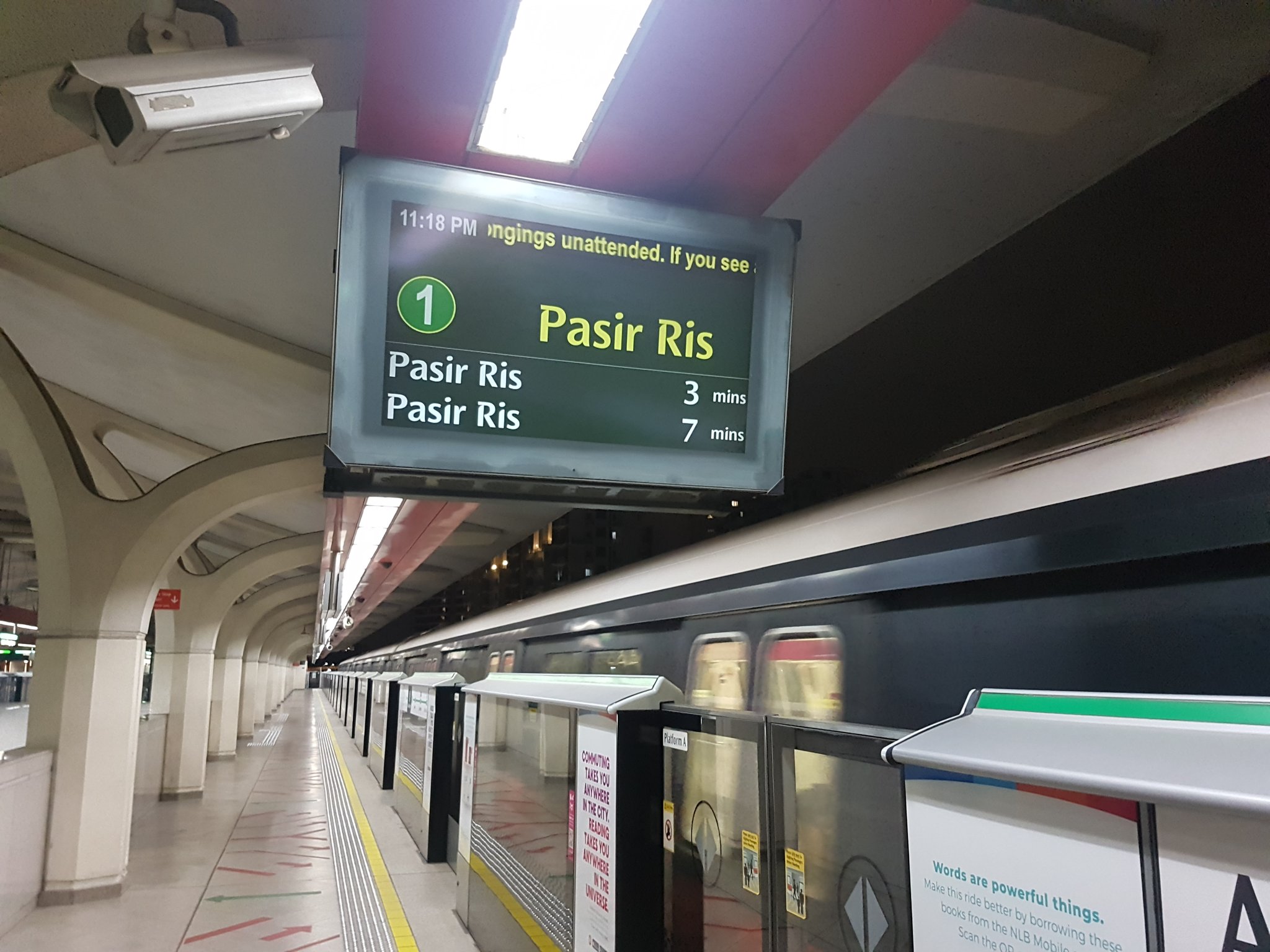
In Paris, the ongoing automation of the system involves installing PEDs. This is for a combination of safety and precision. For safety, unattended trains do not have drivers who would notice if a passenger fell onto the track. For precision, the same technology that lets trains run with a high level of automation, which includes driverless operations but not just, can also let the train arrive with meter-scale precision so that PEDs are viable. This means that we have a ready comparison for how much PEDs should cost.
The cost of M4 PEDs is 106 M€ for 29 stations, or 3.7M€ per station. The platforms are 90 meters long; New York’s are mostly twice as long, but some (on the 1-6) are only 70% longer. So, pro-rated to Parisian length, this should be around $10 million per station with two platform faces. Based on Vanshnook’s track map, there are 204 pairs of platform faces on the IRT, 187 on the IND (including the entire Culver Line), and 165 on the BMT (including Second Avenue Subway). So this should be about $5.5 billion, systemwide.
Here is what the MTA thinks it should cost. It projects $55 million per station – but the study is notable in looking for excuses not to do it. Instead of talking about PEDs, it talks about how they are infeasible, categorizing stations by what the excuse is. At the largest group, it is accessibility; PEDs improve accessibility, but such a big station project voids the grandfather clause in the Americans with Disabilities Act that permits New York to keep its system inaccessible (Berlin, of similar age, is approaching 100% accessible), and therefore the MTA does not do major station upgrades until it can extort ADA funding for them.
Then there is the excuse of pre-cast platforms. These are supposed to be structurally incapable of hosting PEDs; in reality, PEDs are present on a variety of platforms, including legacy ones that are similar to those of New York, for example in Paris. (Singapore was the first full-size heavy rail system to have PEDs – in fact it has full-height platform screen doors, or PSDs, at the underground stations – but there are later retrofits in Singapore, Paris, Shanghai, and other cities.)
The trains in New York do not have consistent door placement. The study surprisingly does not mention that as a major impediment, only a minor one – but at any rate, there are vertical doors for such situations.
So there is a solution to subway falls and suicides; it improves accessibility because of accidental falls, and full-height PSDs also reduce air cooling costs at stations. Unfortunately, for a combination of extreme construction costs and an agency that doesn’t really want to build things with its $50 billion capital plans, it will not happen while the agency and its political leaders remain as they are.
Institutional Issues: Coordination
In this installment of institutional issues, I’m going to talk about coordination, following up from procurement, professional oversight, transparency, proactive regulations, and dealing with change.
The state is to a large extent a coordinating body. Even the more extractive aspects of it, like historically the military, succeeded or failed not by who was the most brutal (they all were brutal) but by who was most efficient at organizing large groups of people.
Coordination in public transit is especially important, because it’s a system with many moving parts: infrastructure, equipment, timetable, development. These do not accrete spontaneously, not in any society that has also invented cars; transit-oriented development in the 21st century looks different from historic development before mass motorization. Organizational capacity makes the difference between a state that grows around mass transit, like Japan or South Korea or Switzerland or Sweden or increasingly France, and one that grows around cars even when the goal is nominally transit first, as is common in the United States but also most of Southeast Asia.
So in general, better coordination means overall better public transit. But it specifically means better investment – more targeted at the right places. And this is especially visible in mainline rail, which is less self-contained than urban metro lines. The right way to plan is to get different bodies to cooperate, such as different railroads and government agencies. And then there is the wrong, American way.
Coordination versus wishlists
In theory, the United States has mechanisms to get different agencies to talk to one another. The Northeast Corridor planning process understands that the corridor has many users and owners: Amtrak, MBTA, Connecticut DOT, MTA, New Jersey Transit, SEPTA, MARC. To ensure they collaborate, there are layers set on top of them, like the NEC Commission.
And yet, the NEC Commission’s plans are not worth the paper they are written on, and the people involved should not work in this field or in government again. The problem is that their idea of coordination is to ask each of the above agencies what its wishlist is, collate the responses, and staple them together.
The wishlist staple job is the opposite of coordination. Coordination means sitting down with intercity and regional rail operators, figuring out their service needs, and writing down a timetable with associated infrastructure plan that maximizes service at minimum cost. Even the accidental moves toward coordination that do exist, like the MBTA plan to complete electrification of the Providence Line and run modern EMUs rather than diesels under catenary, do not figure into the plan: Amtrak still wants a third track on the Providence Line, which such electrification obviates even if Amtrak cuts its Boston-Providence trip time in half. The third track was said to cost $400 million years ago; I do not know if it is still its budget or whether costs are higher now. One such unnecessary project at a time is what it takes to turn what should be a $15 billion project into three-figure billions.
This wishlist mentality is present whenever bad planners (e.g. all Americans) try to do something that involves more than one agency. It’s assumed that different parts of the government must constantly be at one another’s throats. Unless one agency dominates, the only solutions in this mentality are either to do a staple job, or subordinate all agencies to one new hierarchy, typically run by people who have never run transit service and do not respect those who have.
How to plan mainline rail better
Three of the legs of coordinated planning – infrastructure, rolling stock, timetable – are coordinated in an excellent way in Switzerland. (Switzerland is unfortunately too NIMBY for modern TOD.) This does not mean slavishly copying every single Swiss decision, but it does mean that it behooves planners to learn how Swiss rail planners got Europe’s best rail network on a limited (though not quite austerity) budget.
The way it should work is that everything begins from the timetable. Trains must run on the same fixed interval – typically hourly, but denser services should be planned around shorter intervals like 30 minutes or smaller divisors of the hour. This provides the base level of coordination: connections between trains at major stations are to be done at times that are compatible with this interval.
If the trip time between major stations (“Knoten”) is just a bit too long for timed connections at both ends, it means that the trains should be sped up. This is the run trains as fast as necessary maxim, beloved by many high-speed rail opponents who bring up that maxim far more often than they bring up how much rail tunneling Switzerland has built.
Everything must come based on this plan. The choice of rolling stock must be compatible. Switzerland chose bilevel EMUs, because its use case is urban stations with a surplus of platform tracks but limited platform length; the bilevel trades off higher on-train capacity per unit of train length for lower egress capacity, and in a country where the main train station has 26 tracks, the bilevel is the correct choice. Maybe in another environment it is and maybe it isn’t; in New York it is not.
The slate of infrastructure projects must likewise be based on total integration of operations and capital planning. This means being able to trace delays to their source, using data to figure out what the most problematic areas are, and fixing them. Swiss trains are not inherently punctual; delays in the 5 minute range are routine. What sets them apart is that the infrastructure has been designed, at minimum cost, to ensure that delays don’t propagate, whereas in Germany, cascading delays are more common, and the less said about the United States, the better.
Swiss integration, to be clear, operates in an environment that is highly federal, has a smattering of private railroads interoperating with SBB, is stingy about public spending, and has in most cases Western Europe’s most privatized economy. And yet there is no separation of infrastructure and operations, in contrast with the trend in Britain and the EU.
Coordination and saying no
A planning agency that has to work with operators to ensure they all collaborate has to mediate conflict in many cases. This is the origin of the wishlist mentality: by planning overly expensive systems with maximum separation between operators, conflict is avoided, at the minor cost of an order of magnitude increase in the budget.
A better way to mediate is to either propose compromises, or outright saying no. Investment that is not part of the coordinated plan is extra and infrastructure plans should not burden the taxpayers with it. If different bodies conflict, sometimes one is right and the other is wrong, and the infrastructure planners should say so; sometimes who is right and who is wrong is consistent, sometimes it isn’t. Moreover, if bodies refuse to coordinate, it’s important to be able to say no to overall plans.
All of this interfaces with previous posts on this subject. In particular, the infrastructure investment program, whether it’s a regional Verkehrsverbund or an intercity system like the NEC Commission, should consist of subject matter experts. Senior politicians should understand that those experts are paid to maximize the efficiency of an enormous infrastructure program and therefore defend their expertise against attacks.
Institutional Issues: Procurement
This is the start of a multi-post series, of undecided length, focusing on institutional, managerial, and sociopolitical issues that govern the quality of infrastructure. I expect much of the content to also appear in our upcoming construction costs report, with more examples, but this is a collation of the issues that I think are most pertinent at the current state of our work.
Moreover, in this and many posts in the series, the issues covered affect both price and quality. These are not in conflict: the same institutions that produce low construction costs also produce rigorous quality of infrastructure. The tradeoffs between cost and quality are elsewhere, in some (not all) aspects of engineering and planning.
The common theme of much (but not all) of this runs through procurement. It’s not as exciting as engineering or architecture or timetables – how many railfans write contracts and contracting regulations for fun? – but it’s fundamental to a large fraction of the difference in construction costs between different countries. Some of the subheadings in this post deserve full treatments by themselves later, and thus this writeup is best viewed as an introductory overview of how things tie together.
What is procurement?
Procurement covers all issues of how the state contracts with providers of goods and services. In the case of public transportation, these goods and services may include consulting services, planning, design, engineering, construction services, equipment, materials, and operating concessions. The providers are almost always private-sector, but they can also be public companies in some cases – for example, Milan Metro provides consulting services for other Italian cities and Delhi Metro does for other Indian ones, and state-owned companies like RATP, SNCF/Keolis, and DB/Arriva sometimes bid on private contracts abroad.
The contracting process can be efficient, or it can introduce inefficiencies into the system. In the worst case I know of, that of New York, procurement problems alone can double the cost of a contract, independently of any other issue of engineering, utilities, labor, or management quality. In contrast, low-cost examples lack any such inefficiencies in construction.
The issue of oversight
On the list of services that are procured, some are more commonly contracted out than others. Construction is as far as I can tell always bid out to private-sector competition, including equipment (nobody makes their own trains), materials, and physical construction. Design and engineering may be contracted out to consultants, depending on the system. Planning never is anywhere I know of, except some unusually high-cost American examples in which public-sector planning has been hollowed out.
The best practice from Southern Europe as well as Scandinavia is that planning and oversight always stay with the public sector. Even with highly privatized contracts, there’s active in-house oversight over the entire process.
The issue of competition
It is necessary to ensure there’s healthy competition between contractors. This requires casting as wide a net as possible. This is easier to do in environments where there is already extensive private- and public-sector construction going on: Turkey builds about 1 million dwellings a year and many bridges, highways, and rail lines, and therefore has a thick domestic market. In Turkish law, it is required that every public megaproject procurement get at least three distinct bids, or else it must be rebid. This rule is generally easy to satisfy in the domestic market.
But if the domestic market is not enough, it is necessary to go elsewhere. This is fine – foreign bidders are common where they are allowed to participate, always with local oversight. Turkish contractors in Northern Europe are increasingly common, following all of the local labor laws, often partnering with a domestic firm.
Old boy networks, in which contractors are required to have a preexisting relationship with the client, are destructive. They lead to groupthink and stagnation. A Turkish contractor held an Android in front of me and, describing work in Sweden, said, “If a Swede said it’s an iPhone, the Swedes would accept that it’s an iPhone, but if I did, they’d check, and see it’s an Android.” In Sweden at least the domestic system is functional, but in a high-cost environment, it is critical to look elsewhere and let foreigners outcompete domestic business.
It is even more important to make sure the experience of bidding on public contracts is positive. A competent contractor has a choice of clients, and a nightmare client will soon lose its business. Such a loss is triple. First, the contractor would have done a good job at an affordable price. Second, the negative experience, such as micromanagement or stalling, is likely to increase costs and reduce the quality of work. And third, the loss of any contractor reduces competition. In the United States, we have repeatedly heard this complaint from contractors and their representatives, that they always have to deal with the “agency factor,” where the agency can be the MTA or any other transit agency, making things difficult and leading to higher bids.
Good client-contractor relations
The issue of avoiding being a nightmare client deserves special scrutiny. It is critical for agencies to make sure to be pleasant clients. This includes any of the following principles:
- Do not change important regulations midway through the project. In Stockholm, the otherwise-good Nya Tunnelbana project has had cost overruns due to new environmental regulations that required disposal of waste rock to the standards of toxic waste, introducing new costs of transportation.
- Avoid difficult change order process (see below for more details on itemization). It should be everyone against the project, not the agency against the contractors or one contractor against another.
- Avoid any weird process or requirements. The RFPs should look like what successful international contractors are used to; this has been a recent problem of American rolling stock procurement, which has excessively long RFPs defining what a train is, rather than the most standard documents used in Europe. This rule is especially important for peripheral markets, such as the entire United States – the contractor knows what they’re doing better than you, so you should adapt to them.
- Require some experience and track record to evaluate a bid, but do not require local experience. A contractor with extensive foreign experience may still be valuable: Israel’s rail electrification went to such a contractor, SEMI, and the results are positive in the sense that the bid was well below expectations and the only problems stem from a nuisance lawsuit launched by a competitor that bid higher and felt entitled to the contract.
- For a complex contract, the best practice here is to have an in-house team score every proposal for technical merit and make that the primary determinant of the final score, not cost. Across most of the low- and medium-cost examples we have looked at, the technical score is 50-70% of the total and cost 30-50%.
- Do not micromanage. New York’s lowest bid rules lead to a thick book of regulations that force the bids to be as similar to one another as possible in quantity and type of goods, to the point of telling contractors what materials they are allowed to use. This is bad practice. Oversight should always be done with flexibility and competent in-house engineers working in conversation with the stakeholders and never with a long checklist of rules.
Flexibility
Contracts should permit as much flexibility as practical, to allow contractors to take advantage of circumstances for everyone’s benefits and get around problems. This is especially important for underground construction and for construction in a constrained city, where geotechnical surprises are inevitable.
Most of the English-speaking world, and some parts of the rest (Copenhagen, to some extent Grand Paris Express) interpret flexibility to mean design-build (DB) contracts, in which the same firm is given a large contract to both design a project and then build it. However, DB is not used in the lowest-cost examples I know of, and rarely in medium-cost ones. If design is contracted out, then there are almost always two contracts, in what is called design-bid-build (DBB). Sources in Sweden say they use single build contracts, but they often use consultants for supplementary engineering and thus they are in practice DBB; Italy is DBB; Turkish sources claim to do design-build, but in reality there are two contracts, one for 60% design and another for going to 100% and then doing construction.
The Turkish system is a good example of how to ensure flexibility. Because the construction contractor is responsible for the finalized (but not most) design, it is possible to make little changes as needed based on market or in-the-ground conditions. In Italy and Spain, the DBB system is traditional, but the building contractor is allowed to propose changes and the in-house oversight team will generally approve them; this is also how the more functional American DBB contracts work, typically for small projects such as individual train stations, which are within the oversight capacity of the existing in-house teams.
DBB can be done inflexibly – that is, wrong – and often when this happens, everyone gets a bitter taste and comes out with the impression that DB is superior. If the building contractor has to go through onerous process to vary from the design, or is excessively incentivized to follow the design to the letter, then problems will occur.
One example of inflexibility comes from Norway. Norwegian construction costs are generally low, but the Fornebu Line’s cost is around $200 million/km, which is not as low as some other Nordic lines. Norway uses DBB, but its liability system incentivizes rigidly adhering to the design: any defect in the construction is deemed to be the designer’s fault if the builder followed the design exactly but the builder’s fault if the builder made any variation. This means small changes do not occur, and then the design consultants engage in defensive design, rather than letting the building contractor see later what risks are likely based on meter-scale geology.
Itemization and change orders
Change orders, and defensive design therefor, are a huge source of cost overruns and acrimony. Moreover, because of the risks involved, any cost overruns are transmitted back into the overall budget – that is, every attempt to clamp down on overruns will just increase absolute costs, as bidders demand more money in risk compensation. California is infamous for the way change orders drive up costs. New York only avoids that by imposing large and growing risk on the bidders (including, recently, a counterproductive blacklisting system called disbarment, a misplaced effort by Andrew Cuomo to rein in cost overruns); the bidders respond by bidding much higher.
Instead of the above morass, contracts should be itemized rather than lump-sum. The costs of materials are determined by the global, national, and local markets, and the contractor has little control over them; in fact, one of the examples an American source gave me of functional change orders in a DBB system is that the bench at a train station can be made of wood, metal, or another material, depending on what costs the least when physical construction happens.
Labor costs depend on large-scale factors as well, including market conditions and union agreements. The use of union labor ensures that the wages and benefits of the workers are known in advance and therefore unit costs can be written into the contract easily. Spain essentially turns contracts into cost-plus: costs depend on items as bid and as required by inevitable changes, and there is a fixed profit rate based on a large amount of competition between different construction firms.
The upshot is that itemized costs prevent the need to individually negotiate changes. If difficult ground conditions or unexpected utilities slow down the work, the wages of the workers during the longer construction period are already known. It is especially important to avoid litigation and the threat thereof – questions of engineering should be resolved by engineers, not lawyers.
Here, our results, based on qualitative interviews with industry experts, mirror some quantitative work in economics, including Ryan and Bolotnyy-Vasserman. Itemization reduces risk because it pre-decides some of the disputes that may arise, and therefore the required profit rate to break even net of risk is lower, reducing overall cost.
The impact of bad procurement practices
One of our sources told us that procurement problems add up to a factor of 2 increase in New York construction costs. Five specific problems of roughly equal magnitude were identified:
- A regulation for minority- and woman-owned businesses (MWB), which none of the pre-qualified contractors in the old boy network is.
- The MTA factor.
- Change order risk.
- Disbarment risk.
- Profit in a low-competition environment.
MWB and disbarment are New York-specific, but the other three appear US-wide. In California, the change order risk is if anything worse, judging by routine cost overruns coming from change orders. California, moreover, is very rigid whenever a contractor suggests design improvements, as Dragados did for its share of California High-Speed Rail, even while giving contracts to contractors that engage in nuisance change orders like Tutor Perini.
Aligning American procurement practice with best practice is therefore likely to halve construction costs across the board, and substantially reduce equipment costs due to better competition and easier contractor-client relations.
Early Commitment
I want to go back to the problem of early commitment as I explained it two months ago. It comes out of research done by Chantal Cantarelli and Bert van Wee about Dutch cost overruns, but the theory is more generally applicable and once I heard about it I started seeing it in play elsewhere. The short version is that politically committing to a megaproject too early leads to lock in, which leads to compromised designs and higher costs. The solution, then, is to defer commitment and keep alternatives open as much as possible.
The theory of lock in
The papers to read about it are Cantarelli-Flyvbjeerg-Molin-van Wee (2010), and Cantarelli-Oglethorpe-van Wee (2021). Both make the point that when the decision to build is undertaken, it imposes psychological constraints on the planners. They are not long or difficult papers to read and I recommend people read them in full and perhaps think of examples from their own non-Dutch experience – this problem is broader than just the Netherlands.
For example, take this, from the 2010 paper:
Decision-makers show evidence of entrapment whenever they escalate their commitment to ineffective policies, products, services or strategies in order to justify previous allocations of resources to those objectives (Brockner et al, 1986). Escalating commitment and justification are therefore important indicators of lock-in. The need for justification is derived from the theories of self-justification and the theory of dissonance which describe how individuals search for confirmation of their rational behaviour (Staw, 1981; Wilson and Zhang, 1997). This need arises due to social pressures and “face-saving” mechanisms. The involvement of interest groups and organizational pushes and pulls can also introduce pressures into the decision-making process, threatening the position of the decision-makers, who may feel pressure to continue with a (failing) project in order to avoid publicly admitting what they may see as a personal failure (McElhinney, 2005). “People try to rationalize their actions or psychologically defend themselves against an apparent error in judgment” (Whyte, 1986) (“face-saving”). When the support for the decision is sustained despite contradicting information and social pressures, the argumentation for a decision is based on the need for justification.
The focus on face-saving behavior leading to escalation is not unique to the literature on transportation. In international relations, it is called audience cost and refers to the domestic backlash a political leader suffers in case they back down from a confrontation they were involved in earlier; this way, small escalations turn into bigger ones and eventually to war, or perhaps to a forever occupation.
There are a number of consequences of lock in:
- Projects will follow designs set long ago, especially ones that were hotly contentious. For example, California High-Speed Rail has stuck with the decision to build its alignments via Palmdale and Pacheco Pass, since the possibilities of changing Palmdale to the Grapevine/Tejon alignment and Pacheco to Altamont Pass both loomed large (there was a NIMBY lawsuit trying to force a change to Altamont). However, at the same time, there are plans to potentially run the partially-built system without electrification, since that issue was never in contention and is not part o the audience cost.
- There are unlikely to be formal cancellations. California is again a good example: high-speed rail lives as a hulk, not formally canceled even when the governor said of the idea to complete it, back during the Trump administration, “let’s be real,” defending the initial construction segment between Bakersfield and Fresno as valuable in itself. Formal cancellation is embarrassing; a forever construction project is less visible a failure.
- Prioritization is warped to tie into real or imagined connections with the already-decided project. California is not as clear an example of this as of the other two points, but in New York, once the real (if not yet formal) decision to go forward with Second Avenue Subway was made in the 1990s, the Regional Plan Association tied in every proposed expansion plan to that one line.
Surplus extraction
Cantarelli-van Wee treat early commitment as a problem of bad planners, who become psychologically wedded to potentially incorrect solutions. However, it is instructive to shift the locus of moral blame to surplus extraction by political actors, such a local politicians, power brokers, and NIMBYs.
In the story of HSL Zuid, much of the extra cost should be blamed on excessive tunneling. In the flat terrain of Holland and near-coastal Brabant, no tunneling should have been needed. And yet, the line is 20% underground, partly to serve Schiphol, partly to avoid taking any farmland in the Groene Hart. The Groene Hart tunneling has to be understood in context of rural NIMBYism (since at-grade solutions to habitat loss exist in France).
In this formulation, the problem with lock in is not just at the level of planners (though they share most of the blame in California). It’s at the level of small actors demanding changes for selfish reasons, knowing that the macro decision has already been made and the stat cannot easily walk away from the project if costs rise. These selfish actors can be NIMBY, but they can equally be local power brokers wanting a local amenity like a detour to serve them or a station without commercial justification. In Germany, an extra layer of NIMBYism (albeit not on connected with lock in – we have late commitment here) is demands to include freight on high-speed lines, in order to take it off legacy lines, which design forces gratuitous tunneling on high-speed lines in order to moderate the grade.
California is a good example of a non-NIMBY version of this. The state politically committed to building high-sped rail in the 2008 election, for which it showed clear maps of the trains detouring via Palmdale and going to San Francisco via Pacheco Pass. By the time further environmental design showed that the Los Angeles-Palmdale route would require tens of km more tunneling through Soledad Canyon than anticipated to avoid impact to an ecologically sensitive area, the state had already pitched Palmdale as a key high-speed commuter suburb, and Los Angeles County made housing plans accordingly. The county subsequently kept agitating for retaining Palmdale even as other alignment changes in the area were made, turning Palmdale into its pet project.
The planning literature undertheorizes and understudies problems arising from localism. In conversations with people in the European core as well as the United States, there’s an unspoken assumption that the community is good and the state is bad. If the community demands something, it must represent correction of a real negative externality, rather than antisocial behavior on behalf of self-appointed community leaders who the state can and should ignore. It doesn’t help that the part of Europe with the least community input is the Mediterranean countries, which Northern European planners look down on, believing any success there must be the result of statistical fudging.
The solution: late commitment
To reduce costs and improve projects, it’s best to delay political commitment as late as possible. This means designing uncertain projects and only making the decision to build at advanced stages of design – maybe not 100% but close enough that major revisions are not likely. The American situation in which there is no regular design budget so agencies rely on federal funding for the design of the projects they use the same federal funding for leads to bad outcomes over and over. California, which went to referendum without completing the environmental design first, takes the cake.
Late commitment is thankfully common in low- and medium-cost countries. Germany does not commit to high-speed rail lines early, and, judging by Berlin’s uncertainty over which U-Bahn extensions to even build, it doesn’t commit to subways early either. Sweden is investigating the feasibility of high-speed rail but rail planners who I talk to there make it clear that it’s not guaranteed to happen and much depends on politics and changes in economic behavior; overall, Nordic infrastructure projects are developed by the civil service beyond the concept stage and only presented for political negotiation and approval well into the process. Southern European planners com up with their own extension programs and politically commit close to the beginning of construction.
The Scope and Future of Our Project on Costs
I was on a panel at Eno’s symposium on costs, talking with other teams investigating comparative construction costs. We worked off a list of questions Eno’s Robert Puentes had sent us before, knowing that the list was too long for five people (me, Eric, Laura Tolkoff, Ethan Elkind, Romic Aevaz) to cover in an hour. So for more completeness, here are my responses – and pay attention specifically to issues of scope and what we should be doing in the future. In particular, as we’re getting funded to do other things, we will likely have room in the budget to add a few more cases, and hire people who can put them together.
What were your key takeaways on the extent of our cost premium, and key cost drivers?
I blogged this just before the panel. The only major headers I’ll add are poor interagency coordination in the United States, especially for projects that are or touch commuter rail, and a political system full of real and imagined veto points. The imagined veto points are not unique to the US – the UK, Germany, and the Netherlands all have visible problems with excessive tunneling on high-speed rail projects coming from NIMBY demands, NIMBY demands that at least in the first two cases are paper tigers that the state can ignore if it doesn’t mind a few news cycles with negative headlines.
Questions on scope
There were three separate questions on this, since our approaches differ – Eno has more cases covered in less depth (and we made sure to pick disjoint comparison cases from theirs), Berkeley focuses on California projects. So we went through questions about what our respective scopes and limitations are:
- Could you walk us through the general scope and bounds of your work?
- What were some of the limitations you ran into when collecting information on costs/timeline, and what recommendations would you have to improve data reporting for projects?
- What are some of the lingering questions or areas for future study that your teams have flagged?
The answer to all three is that our scope – the six cases – looks at specific issues rather than general ones. The forest comprises trees and cannot be studied as an ecosystem until one understands the biology of the tree species therein. But then, understanding the biology of the tree species requires understanding the ecosystem they have evolved in; the reason we do cases simultaneously is that hearing about issues arising in one place informs our work on other places.
That said, I think it matters that none of our six cases is typical. Medium-cost environments like France, Germany, and Japan are unfortunately not in scope; I’ve read a lot of work on cot issues plaguing Grand Paris Express, but unfortunately not in any global or even just European comparative sense. All of our cases are Western (for infrastructure purposes Turkey is a Western country); this matters because, while European and East/Southeast Asian costs are broadly the same, both covering the entire global range short of American costs, there are notable differences in how they build, so it’s plausible that there re things one side does right that the other doesn’t in both directions. All of our cases are first-world or, in Istanbul’s case, 1.5th-world.
This means that we would like to add cases. Attractive targets include anything in Spain, to beef up our set of low-cost examples, and then cases that represent examples we didn’t study, that is places that are medium-cost, non-Western, or not in or in the penumbra of the developed world. My suspicion is that medium-cost examples will interpolate practices – Germany and France both vaguely appear to mix good Scandinavian or Southern European behavior with bad British and American behavior, each in its own way. But I do not know and that’s why we’d like to add cases. In middle-income countries like Russia, Mexico, Brazil, and China, and in low-income ones like India or the Philippines, I do not really know what to expect and my only explanation so far is completely different from any first-world pattern.
We should have a budget for this, but I don’t yet know how many cases we can juggle in addition to where we’re going to shift the main of our attention starting in early 2022, that is high-speed rail and a synthesis for the Northeast Corridor. Most likely other people will write the cases (for pay of course) and we will supervise in between looking at the history and technical data of the Northeast Corridor.
Consensus and Costs
I’m in the middle of an online symposium at Eno about construction costs; I talked on Tuesday and I think there will be a recording made available later. The conference is good by a lot of standards, including the “do they tell me things I don’t know about costs” standard. But for now, I want to address one point made repeatedly in interviews re some low-cost cities: the argument from consensus. It’s wrong, and leads to very wrong conclusions.
What is the argument from consensus?
In Eno’s lowest-cost comparison cities, like Madrid, there’s political consensus in favor of building more subways. Repeated panels gave this example of how in the 1990s and 2000s, PP and PSOE both supported subway construction and promised to build more in their election campaigns for the Community of Madrid. PSOE in fact attacked PP saying its proposals were unrealistically ambitious, but then the Madrid Metro expansion opened as planned. In such a political environment, no wonder planners had leeway to build the system without much interference.
Why is this wrong?
Britain has bipartisan political consensus in favor of both Crossrail and High Speed 2, both of which are explicitly supported in both parties’ manifestos. Its construction costs are still Europe’s highest.
More to the point, the United States is not uniformly an environment where public transportation is a partisan flashpoint, because in most of the cities that build subways, the Republican Party does not exist. The closest thing to a Republican Party in New York is the Manhattan Institute, which criticizes unions incessantly but does not call for ending public support for the subway and refrains from making the anti-transit arguments made by national Republican outfits like Reason and Cato. The last Republican mayor, Rudy Giuliani [sic], tried to expand the subway to LaGuardia. I’ve met New Yorkers who view Giuliani as a savior and who are ant-immigration climate denialists and thy too think the city and state should make the subway better – if anything they treat its poor state as evidence that the Democrats can’t govern.
This consensus does not lead to low costs. Why would it? There is no respect for planners or engineers. The consensus in New York means every governor installs their political cronies at the head of the agencies involved. None of the mechanisms that make Madrid Metro work is present.
The consequences
Just having more political support for subway construction is not going to by itself make things better. American states where investment is safe from cancellation do not do better than ones where one election could spell doom for the investment program. Sea changes are required, not just more public support.
Express Rail Tunnels and Regional Rail Capacity
In three cities that I know of, there are plans to deal with an incipient regional rail capacity crunch by building a new tunnel: Tel Aviv, Hamburg, London. The route in question in all cities already has regional rail service making frequent urban stops as well as longer-distance intercity trains. Setting Tel Aviv aside – new tracks are not necessary there at all – both Hamburg and London have a choice of what to build in the tunnel. In both cases, the answer must be intercity rail and not regional rail. This affects Crossrail 2 in London, currently shelved but still in active planning, as well as plans for Hamburg Hauptbahnhof-Altona capacity improvements.
The dominant factor in the cost of an expensive urban railway in a constrained environment is the stations. Low-cost countries build very cheap stations, but that’s true in outlying areas, urban as they may be, and not in city center areas under and around older subways. What’s more, Britain and Germany are not low-cost countries. German costs are somewhat higher than the global median, British costs among the world’s highest. Thus, keeping down station costs is paramount – and express tunnels have fewer stations than local tunnels.
Normally, the express vs. local issue is not relevant to a new urban rail line. Yes, more stations are more expensive, but on a line designed to open up service to a new area, more stations also provide more access, so the extra cost is often worth it. This is true even for urban subways that act as relief lines, like Second Avenue Subway, a relief line for the Lexington Line: more stations provide better local access and therefore increase the line’s relief value.
However, when the problem comes from regional or longer-distance capacity, all of this goes out the door. Crossrail 2 includes a long tunnel from Central London all the way to Wimbledon not because of purely local needs but because of very high rail usage along the South West Main Line. In Hamburg the problem is similarly about the main line between Hauptbahnhof and Altona – local traffic is saturated on the S-Bahn, and all other trains have to squeeze on the remaining two tracks of the Verbindungsbahn. Thus, capacity expansion should involve a tunnel with the fewest number of stations, on the most express services.
And yet both cities are doing it wrong. Hamburg is planning an S-Bahn tunnel, with the existing S-Bahn route then given over to regional trains, to be segregated away from the intercity trains. But there are already two Hauptbahnhof-Altona S-Bahn routes – that’s not where the service need is. Instead, new tunnels should go between the stations without stopping, to reduce costs, hosting intercity trains while regional trains take over the existing intercity tracks.
London is likewise planning on an undulating connection between Clapham Junction and Wimbledon, with links to other parallel north-south lines in the area. This is not good planning – those new stations are inordinately expensive and not needed for network connectivity. If there is no way to six-track the South West Main Line above-ground by replacing the sloped berm with retaining walls, it’s the fastest trains that should go underground, to save money on stations. Crossrail 2 is a £31.2 billion project; I don’t think Paris has spent this money on all Métro and RER lines in the region to date combined, and Grand Paris Express, at a broadly similar cost, includes 160 km of tunnel. It’s necessary to economize and build the tunnels that are necessary, and not the ones London would like to have.

