Focus on What’s Common to Good Transit Cities, not on Differences
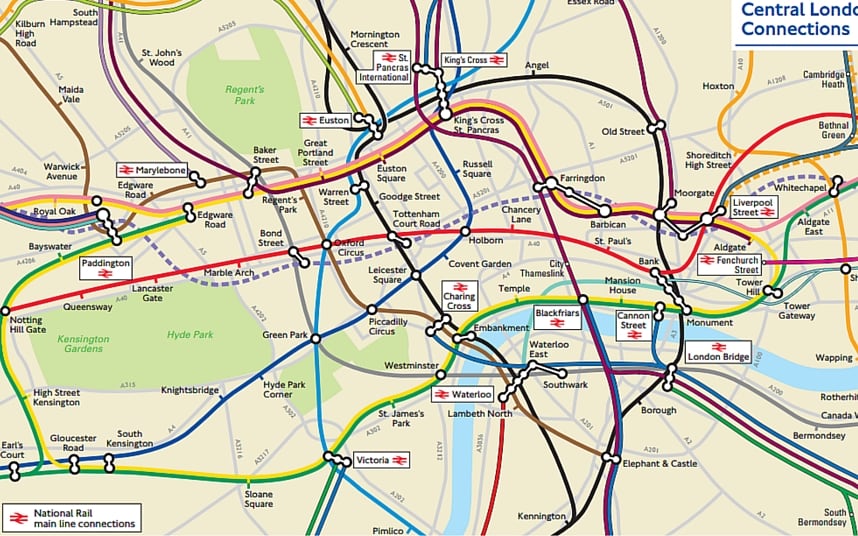
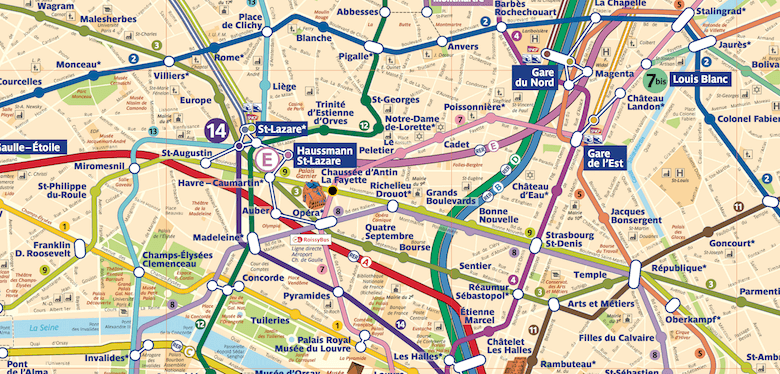
Successful transit cities are not alike. There are large differences in how the most expansive transit networks are laid out. It takes multiple series of posts across several blogs (not just mine but also Human Transit and others) covering just one of them, for example stop spacing or how construction contracts are let. With so much variation, it’s easy to get caught up in details that differentiate the best systems. After all, the deepest communities of railfans tend to sprout in the cities with the largest rail networks; arguing with railfans with experience with London, Tokyo, or Paris is difficult because they know intricate details of how their systems work that I am catching up on but only know in the same depth for New York. Add in the fact that London and Paris view each other as peer cities and from there the route to arguing minutiae about two cities that by most standards have good public transit is short.
But what if this is wrong? What if, instead of or in addition to figuring out differences among the top transit cities, it’s useful to also figure out what these transit cities have in common that differentiates them from auto-oriented cities? After all, in other aspects of development or best practices this is well-understood: for example, a developing country can choose to aim to be hyper-capitalist like Singapore or the US or social democratic like Sweden or France, but it had better develop the institutions that those four countries have in common that differentiate them from the third world.
Unfortunately, before discussing what the common institutions to transit cities are, it’s necessary to discuss things that may be common but don’t really matter.
The US as a confounding factor
The biggest problem with figuring out things all good transit cities have in common is that in the developed world, the US (and to some extent Canada and Australia) is unique in having bad transit. Frequent commenter Threestationsquare has a list of cities by annual rapid transit ridership (counting BRT but not infrequent commuter rail, which lowballs parts of the US); New York is near the top, but the second highest in the US, a near-tie between Boston, Chicago, and Washington, would rank #22 in Europe. As a result, some social, political, and technical features that appear to differentiate good and bad transit are not really about transit but about the US and must be discarded as confounding factors. Fortunately, most of these confounding factors are easy to dispose of since they also occur in New York.
The more difficult question concerns factors that are distantly related to the weakness of US transit but are not direct explanations. I wrote about racism as such a factor a few months ago, arguing that high US construction costs come from weak civil service, which in turn comes from the way American segregation works. The US is not uniquely racist or even uniquely segregated; the unique aspect is that it a) has a long-settled oppressed minority and not just immigrants who arrived after the characteristic of the state was established, and b) has segregation within metro areas (unlike Singapore, which has social but not spatial segregation) but not between them (unlike Israel, where the built-up area of Tel Aviv has very few Arabs). But while this can explain why institutions developed in a way that’s hostile to transit, it’s not a direct explanation for poor US transit except in Atlanta, where the white state underinvests in the black city. White people in Boston, Los Angeles, Houston, and other cities with little to no public transit do not avoid the bus or the train out of stereotypes that match typical American racial stereotypes, such as crime; they avoid the train because it doesn’t go where they’re going and the bus because it is slow and unreliable.
There are two ways to avoid confounding factors. The first is the sanity check, where available: if some feature of transit exists across major transit cities but is absent in auto-oriented cities not just in the US but also in Canada, Australia, New Zealand, Israel, and Italy, then it’s likely to be relevant. Unfortunately, clean examples are rare. The second and more difficult method is to have theoretical understanding of what matters.
Size artifacts
London and Paris are transit cities. So are Prague and Stockholm. I’ve stressed the importance of scale-variance before: features that work in larger cities may fail in smaller ones and vice versa. Thus, it’s best to look at common features of successful transit cities within each size class separately.
In fact, one way cities can fail is by adopting transit features from cities of the wrong size class. China is making the mistake in one direction: Beijing and Shanghai have no express subway trains or frequent regional rail services acting as express urban rail, and as a result, all urban travel has to slow down to an average speed of about 35 km/h, whereas Tokyo has express regional lines averaging 60 km/h. China’s subway design standards worked well for how big its cities were when those standards were developed from the 1970s to the 1990s, but are too small for the country’s megacities today.
In contrast, in the developed world, the megacities with good public transit all have frequent express trains: Tokyo and Osaka have four-track (or even eight-track!) regional lines, Paris has the RER, New York has express subways (and the premium-price LIRR trains from Jamaica to Penn Station), London has fast regional rail lines and Thameslink and will soon have Crossrail, Seoul has a regional rail network with express trains on Subway Line 1, and Moscow stands alone with a strictly two-track system but has such wide stop spacing that the average speed on the Metro is 41 km/h. Smaller transit cities sometimes have frequent express trains (e.g. Zurich and Stockholm) and sometimes don’t (e.g. Prague), but it’s less important for them because their urban extent is such that a two-track subway line can connect the center with the edge of the built-up area in a reasonable amount of time.
And if China failed by adopting design standards fitting smaller cities than it has today, the US fails in the other direction, by adopting design standards fitting huge megacities, i.e. New York. Small cities cannot hope to have lines with the crowding levels of the Lexington Avenue Line. This has several implications. First, they need to scale their operating costs down, by using proof of payment ticketing and unstaffed stations, which features are common to most European transit cities below London and Paris’s size class. Second, they need to worry about train frequency, since it’s easy to get to the point where the frequency that matches some crowding guideline is so low that it discourages riders. And third, they need to maximize network effects, since there isn’t room for several competing operations, which means ensuring buses and trains work together and do not split the market between them.
The best example of an American city that fails in all three aspects above is Washington. While railfans in Washington lament the lack of express tracks like those of New York, the city’s problems are the exact opposite: it copied aspects of New York that only succeed in a dense megacity. With interlining and reverse-branching, Washington has low frequency on each service, down to 12 minutes off-peak. The stations are staffed and faregated, raising operating costs. And there is no fare integration between Metro and the buses, splitting the market in areas with price-sensitive riders (i.e. poor people) like Anacostia.
The political situation
While I’ve written before about what I think good metro design standards are, these standards themselves cannot separate the major transit cities from cities like Los Angeles (which has about two and a half rail trunks in a metro area larger than that of London or Paris) or Tel Aviv (which has no metro at all). Instead, it’s worth asking why these cities have no large subway systems to begin with.
In the case of Tel Aviv, Israel has had an official policy of population dispersal since independence. After independence the North and South of the country had Arab majorities, and the government wished to encourage Jews to settle there to weaken any Palestinian claims to these areas. As a result, Prime Minister David Ben Gurion rejected a plan to develop an urban rail network centered on Tel Aviv and instead encouraged low-income Jewish immigrants to move far away, either to depopulated Arab towns or to new towns (“development towns”) built at strategic points for national geopolitics. Decentralization was national policy, and with it came auto-oriented urbanism. A less harsh but equally politicized environment led to Malaysia’s auto-centric layout: Paul Barter’s thesis outlines how Malaysia choked informal transit and encouraged auto-oriented suburbanization in order to create an internal market for state-owned automakers.
In the case of the US, the situation is more complex, since there were several distinct political trends in different eras favoring cars. In postwar suburbia (and in Los Angeles going back to the 1920s) it was the association of cars with middle-class normality, and in California also with freedom from hated railroads; it’s related to the fact that American suburbanization was led by the middle class rather than by the working class as with more recent exurbanization. In Israel suburbanization was led by the working class, but the deliberate government policy of decentralization meant that the urban middle class’s demands for better transportation were ignored until the 1990s.
Without enough of an urban middle class to advocate for more transit, US transit withered. New cities in the Sunbelt had little demand for public transit, and in the older cities the middle class cared little for any transit that wasn’t a peak-only commuter train from the suburbs to the CBD. Moreover, in existing transit cities the middle class demanded that the urban layout change to fit its suburban living situation, leading to extensive job sprawl into office parks that are difficult to serve on transit. This paralleled trends in Canada, Australia, and New Zealand; Sydney in particular saw middle-class suburbanization early, like Los Angeles.
The political situation changed in the 1970s, 80s, and 90s, but by then high construction costs, NIMBYism constraining the extent of TOD (unlike in Canada), and indifference to leveraging regional rail for urban transit (as in Canada and until recently Israel but unlike in Australia) made it difficult to build more public transit lines.
Regional rail and TOD
The largest transit cities in the rich and middle-income world all make extensive use of regional rail, with the aforementioned exception of Chinese cities, where the lack of regional rail is creating serious travel pain, and New York, where the city itself is transit-oriented but its suburbs are not. Smaller transit cities usually make use of regional rail as well, but this isn’t universal, and to my understanding is uncommon in Eastern Europe (e.g. Kyiv has one semi-frequent ring line) even in cities with very high metro and tramway usage.
However, smaller transit cities that do not have much regional rail have full metro systems and not just tramways, let alone BRT. Curitiba and Bogota are famous for their BRT-only transit networks, but both instituted their systems in a context with low labor costs and both are building metro systems right now.
The other common element to transit cities is TOD. Here, we must distinguish old cities like London, Paris, Berlin, and Vienna, whose urban layout is TOD because it was laid out decades before mass motorization, and newer cities like Stockholm, Tokyo, and every city in Eastern Europe or the East Asian tiger states. The latter set of cities built housing on top of train stations, often public housing (as in the communist world or in Stockholm) but not always (as in Tokyo and to some extent Hong Kong), in an era when the global symbol of prosperity was still the American car-owning middle class.
The importance of TOD grows if we compare countries with relatively similar histories, namely, the US and Canada. Neither country does much regional rail, both have had extensive middle-class suburbanization (though Canada’s major cities have maintained bigger inner-urban middle classes than the US’s), and English Canada’s cities came into the 1970s with low urban density. The difference is that Canada has engaged in far more TOD. Calgary built up a large CBD for how small the city is, without much parking; Vancouver built up Downtown as well as transit-oriented centers such as Metrotown, New Westminster, Lougheed, and Whalley, all on top of the Expo Line. Nowhere in the US did such TOD happen. Moreover, American examples of partial TOD, including Arlington on top of the Washington Metro and this decade’s fast growth in Seattle, have led to somewhat less awful transit usage than in the rest of the country.
Most cities in the developed world are replete with legacy rail networks that can be leveraged for high-quality public transit. We see cities that aim at transit revival start with regional rail modernization, including Auckland and to some extent Tel Aviv (which is electrifying its rail network and building new commuter lines, but they run in freeway medians due to poor planning). Moreover, we see cities that are interested in transit build up high-rise CBDs in their centers and high- and mid-rise residential development near outlying train stations.
“Regional rail and TOD” is not a perfect formula; it elides a lot of details and a lot of historical factors that are hard to replicate. But both regional rail and TOD have been major elements in the construction of transit cities over the last 60 years, and while they both have exceptions, they don’t have many exceptions. In the other direction, I don’t know of examples of failed TOD – that is, of auto-oriented cities that aggressively built TOD on top of new or existing rail lines but didn’t manage to grow their transit ridership. I do know some examples of failed regional rail, but usually they make glaring mistakes in design standards, especially frequency but also station siting and fare integration.
At a closer in level of zoom, it’s worthwhile to talk about the unique features of each transit city. But when looking at the big picture, it’s better to talk about what all transit cities of a particular size class have in common that auto-oriented cities don’t. Only this way can an auto-oriented city figure out what it absolutely must do if it wants to have better public transit and what are just tools in its kit for achieving that goal.