A Theory of Zoning and Local Decisionmaking
This weekend there’s a conference in the US, YIMBY 2016, by a national network of activists calling for more housing. I am not there, but I see various points raised there via social media. One is a presentation slide that says “NIMBYism is a collective action problem: no single neighborhood can lower prices by upzoning; might still be in everyone’s interest to upzone at city/state level.” I think this analysis is incorrect, and in explaining why, I’d like to talk about a theory of how homeowners use zoning to create a housing shortage to boost their own property values, and more generally how long-time residents of a city use zoning to keep out people who are not like them. In this view,zoning is the combination of a housing cartel, and a barrier to internal migration.
For years, I’ve had trouble with the housing cartel theory, because of a pair of observations. The first is that, contra the presentation at YIMBY, zoning is driven by homeowners rather than by renters; for an overview, see the work of William Fischel. The second is that restrictive zoning typically correlates with local decisionmaking, such as in a neighborhood or small city, while lax zoning typically correlates with higher-level decisionmaking, such as in a city with expansive municipal boundaries or in an entire province or country; see below for more on this correlation. These two observations together clash with the housing cartel theory, for the inverse of the reason in the above quote from the YIMBY presentation: it’s more effective to create a housing shortage in a large area than in a small one.
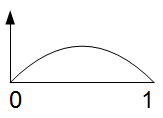
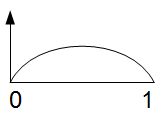
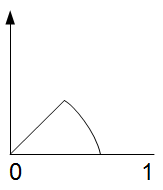
To a good approximation, land value equals (housing price – housing construction cost)*allowed density. If a small municipality upzones, then as in the quote, housing price doesn’t change much, but allowed density grows, raising the price a homeowner can get by selling their house to developers who’d build an apartment building. In contrast, if a large municipality upzones then housing prices will fall quite a bit as supply grows, and depending on the price elasticity, land value might well go down. If x = housing price/housing construction cost and e = price elasticity for housing, i.e. price is proportional to density^(-1/e), then maximum land value occurs when x = e/(e-1), provided e > 1; if e < 1 then maximum value occurs when x is arbitrarily large. Price elasticity is much higher in a small municipality, since even a large increase in local housing supply has a small effect on regional supply, limiting its ability to reduce prices. This implies that, to maximize homeowner value, small municipalities have an incentive to set density limits at a higher level than large municipalities, which will be seen in faster housing growth relative to population growth.
What we see is the exact opposite. Consider the following cases, none a perfect natural experiment, but all suggestive:
1. In the Bay Area, we can contrast San Francisco (a medium-size urban municipality), San Jose and generally Santa Clara County (San Jose is medium-size for a central city and very large for a suburb), and San Mateo County (comprising small and medium-size suburbs). San Mateo County is by far the stingiest of the three about permitting housing: over the last three years it’s averaged 1,000 new housing units per year (see here); in 2013, the corresponding figures elsewhere in the Bay Area were 2,277 new housing units in San Francisco and 5,245 in Santa Clara County. Per thousand people (not per housing unit), this is 2.63 in San Francisco, 2.73 in Santa Clara, and 1.31 in San Mateo. In Alameda County, comprising medium-size cities and suburbs, with a less hot housing market because of the distance from Silicon Valley jobs, growth was 2,474 units, 1.51 per 1,000 people. In small rich Silicon Valley municipalities like Palo Alto and Menlo Park, NIMBYs have effectively blocked apartment construction; in much larger and still rich San Jose, the city has a more pro-growth outlook.
2. Among the most important global cities – New York, Paris, London, and Tokyo – Tokyo has by far the fastest housing stock growth, nearly 2% a year; see article by Stephen Smith. In Japan, key land use decisions are made by the national government, whereas in Paris, London, and New York, decision is at a lower level. London builds more than New York and Paris; its municipal limit is much looser than Paris’s, with 8.5 million people to Paris’s 2.2 million even though their metro areas have similar populations. New York has a fairly loose limit as well, but the development process empowers lower-level community boards, even though the city has final authority.
3. Canada has a relatively permissive upzoning process, and in Ontario, the planning decisions are made at the provincial level, resulting in about 1.3% annual housing growth in Toronto in the previous decade; in the same period, San Jose’s annual housing growth was about 1% and San Francisco’s was 0.9%.
4. France has recently made a national-level effort to produce more housing in the Paris region, especially social housing, due to very high housing prices there. Last decade, housing production in Ile-de-France was down to about 30,000-35,000 per year, averaging to 2.6 per 1,000 people, similar to San Francisco; see PDF-pp. 4-5 here and the discussion here. With the new national and regional effort at producing more social housing, plans appear to be on track to produce 30,000 annual units of social housing alone in the next few years; see PDF-p. 6 here. With 7,000 annual units within city limits, Paris expects to build somewhat more per capita than the rest of the region.
In France, the combination of a national focus on reducing housing burden and the observation that higher-level decisionmaking produces more housing makes sense. But elsewhere, we need to ask how come homeowners aren’t able to more effectively block construction.
My theory is that the answer involves internal migration. Consider the situation of Palo Alto: with Stanford and many tech jobs, it is prime location, and many people want to move there. The homeowners are choosing the zoning rule that maximizes their ability to extract rents from those people, in both the conventional sense of the word rent and the economic sense. Now consider decisionmaking at the level of the entire state of California. California can raise housing prices even more effectively than Palo Alto can by restricting development, but unlike Palo Alto, California consists not just of residents of rich cities, but also of residents of other cities, who would like to move to Palo Alto. In the poorer parts of the state, there’s not much point in restrictive zoning, because there isn’t that much demand for new housing, except perhaps from people who cannot afford San Francisco or Los Angeles and are willing to endure long commutes. On the contrary, thanks to the strength of internal migration, a large fraction of prospective residents of Palo Alto live elsewhere in California. Nor do people in poor areas, where houses aren’t worth much as investments, gain much from raising house prices for themselves; the ability to move to where the good jobs are is worth more than raising housing prices by a few tens of thousands of dollars. This means that the general interest in California is to make Palo Alto cheaper rather than more expensive. The same is true of Japan and Tokyo, or France and Paris, or Ontario and Toronto.
While superficially similar to the point made in the presentation quoted at the beginning of this post, my theory asserts the opposite. The issue is not that individual municipalities see no benefit in upzoning since it wouldn’t reduce rents by much. It’s that they see net harm from upzoning precisely because it would reduce rents. It is not a collective action problem: it is a problem of disenfranchisement, in which the people who benefit from more development do not live in the neighborhoods where the development would be taking place. High-level decisionmaking means that people who would like to move to a rich area get as much of a vote in its development policy as people who already live there and have access to its amenities, chief of which is access to work. It disempowers the people who already have the privilege of living in these areas, and empowers the people who don’t but would like to.
Individual rich people can be virtuous. Rich communities never are. They are greedy, and write rules that keep others out and ruthlessly eliminate any local effort to give up their political power. They will erect borders and fences, exclude outsiders, and demagogue against revenue sharing, school integration, and upzoning. They will engage in limited charity – propping up their local poor (as San Francisco protects low-income lifelong San Franciscans via rent control), and engaging in symbolic, high-prestige giving, but avoid any challenge to their political power. Upzoning is not a collective action problem; it is a struggle for equal rights and equal access to jobs regardless of which neighborhood, city, or region one grew up in.