The expression democratic deficit is most commonly used to refer to the European Union and its behind-the-scenes style of lawmaking. I’ve long held it is equally applicable to local politics, especially in the United States. With the EU election taking place later today, I am going to take this opportunity to zoom in one a key aspect: who gets to vote informedly? This is a critical component of the local democratic deficit. After all, there is universal franchise at the local level in modern democracies, same as at the national level, and when election dates coincide the turnout rates coincide as well. EU elections have had low turnout, but this has to be understood as a consequence rather than a cause of the democratic deficit.
This does not exist on the national level anywhere that I know of. In federal states it may not exist on the state level, either: as far as I can tell, Canada and Germany offer voters clear choices on the province/state level, and it’s only in the United States that the democratic deficit exists in the states.
On the EU level, the problem is slowly solving itself, since a highly salient issue is growing, namely, the legitimacy of the EU itself. People can clearly vote for parties that hold that the EU as it currently exists is illegitimate, such as right-populist parties under the ENF umbrella; for parties that offer continuity with the EU as it is, that is Christian-democratic, social-democratic, and liberal parties; and for various reform parties, that is greens and the far left on the left, or whatever remains of the Tories on the right. For what it’s worth, turnout so far has inched up from 2014 levels.
But on the local level, the problem remains as strong as ever. The main consequence is that local elections empower NIMBYs, simply because they have the ability to make an informed choice based on their ideology and other groups lack that power. The interest groups that benefit from housing shortages naturally get more political powers than those that benefit from abundant housing. In transportation, too, transit users tend to be politically weaker than drivers relative to their share of the electorate, but the problem is nowhere near as acute as that of general NIMBYism.
What is informed voting?
Informed voting does not mean voting the right way. A voter may be able to make an informed choice even for an uninformed position; for example, people who think cutting taxes reduces the deficit have an economically uninformed belief, but still count as informed voters if they recognize which parties they can vote for in order to prioritize tax cuts. Informed voting, at least to me, means being able to answer the following questions correctly:
- What are the political issues at stake?
- Which positions on these issues can plausibly be enacted, and how difficult would such enactment be?
- Which organs of state undertake the relevant decisions? Is it the entire legislature, a specific standing committee, the courts, the civil service, etc.?
- Which political groups have which positions on these issues, and how much they’re going to prioritize each issue? Which political groups may not have strong positions but are nonetheless potential allies?
National elections exhibit the most informed voting. For example, in the United States, most voters can identify that the key issues differentiating the Democrats and Republicans are abortion rights, tax rates (especially on higher incomes), and health care, and moreover, the abortion issue is decided through Supreme Court nominations whereas the others are in Congress with the consent of the president. Additional issues like foreign policy, environmental protection, and labor may not be as salient nationwide, but people who care about them usually know which party has what positions, where decisions are made (e.g. foreign policy is decided by the president and appointed advisors, not Congress), and which factions within each party prioritize these issues and which have other priorities.
This does not mean all voters are informed. This does not even mean most swing voters are informed. In the United States it’s a commonplace among partisans that swing voters are exceedingly uninformed. For example, here is Chris Hayes reporting on the 2004 election:
Often, once I would engage undecided voters, they would list concerns, such as the rising cost of health care; but when I would tell them that Kerry had a plan to lower health-care premiums, they would respond in disbelief–not in disbelief that he had a plan, but that the cost of health care was a political issue. It was as if you were telling them that Kerry was promising to extend summer into December.
But the low levels of information among undecided voters, while important on the margins, come from a context in which a large majority of American voters consistently support one party or another, and over the generations the parties have perfected a coalition of interests ensuring each will get about half the vote.
This situation is not US-specific. Israeli voters are highly informed about the relevant issues, led by the control over the Palestinians in the West Bank and the Gaza Strip. They know which parties are prepared to negotiate with the Palestinian Authority, withdraw from the settlements, and recognize an independent Palestinian state, and which will do no such thing, and vote accordingly. Parties for the most part announce in advance which bloc they are to be part of; even parties that would be fine cooperating with either side in order to get money for their special interests, such as the ultra-Orthodox parties, are compelled to announce in advance which side they’ll back (the right), and so far they have not deviated from it. Every single party in Israel’s most recent election had an obvious bloc, left or right; in 2015, every single party did but one, Kulanu, which was a member of the right bloc but at the time pretended to be undecided.
The European democratic deficit
The democratic deficit occurs when it is not possible for a large majority of voters to know in advance what the issues are and how to vote on them.
The European Parliament suffers from a democratic deficit, despite having strong, coherent political parties, because of its tradition of behind-the-scenes government by consensus of EPP and S&D. It is difficult for a voter to know what exactly the difference would be if S&D were somewhat stronger and EPP somewhat weaker. Europe Elects’ latest projection has a tight race for whether ALDE and the parties to its left will have a majority, making ALDE the median party on the left-right scale, or whether they will come just short, making EPP the median. And yet, I have no idea what it would mean, despite the fact that there are important issues, including climate change and immigration, on which there is a cleave between ALDE-and-leftward parties and EPP-and-rightward parties.
I am planning to vote for the Green Party rather than for the Social Democrats, since the Greens here opposed Article 13 whereas the Social Democrats expressed concern but mostly voted for it. But I genuinely do not know whether a stronger G/EFA and weaker S&D would matter much for digital freedom, nor do I know whether behind the scenes a stronger S&D and a weaker EPP would’ve resulted in a different law.
I found myself in a similar situation in the previous (and first) time I was enfranchised, in the Swedish local and regional elections of 2014. Thanks to EU reciprocity laws, I could vote in the local and regional elections but not the coincident national election. I had some knowledge of the salient political issues at the national level from reading the news, looking at slogans on street signs, and browsing party platforms, but had no idea what this would mean within the context of Stockholm County; lacking much of a local social network, I listened to my postdoc advisor’s advice to read the national platforms and vote based on the one I liked most, and voted Green (which, judging by my advisor’s reaction, was not what he would have preferred). Put another way, EU laws let me vote for a mayor and city council whose name I did not even know, but not for the Riksdag, where I had a decent idea of what the difference between the Greens and Social Democrats was.
The extreme right in Europe has ironically improved democracy, because it has given people something to vote against. I may not know how the EU would look different if EPP lost a few percentage points of its vote share and S&D and the Greens gained a few each, but I definitely know how it will look if ENF and parties that aren’t part of ENF but should be, like Hungary’s Fidesz, gain power. When the very existence of a multiracial EU is at stake, it is easier to figure out which parties are firmly committed (G/EFA, S&D, ALDE, and to a large extent EPP) and which aren’t, and on what grounds (GUE/NGL from the left, the Tories from the mainline right, ENF from the extreme right). That the pro-European parties will certainly win a huge majority of the vote among them is less relevant – the point is not to get more votes than ENF but to completely delegitimize ENF, so the margin of defeat counts.
The American democratic deficit
If in Europe the problem is the disconnect between voting for a party at the non-national (or non-state) level and seeing policy results, in the United States local government has no parties at all. Cities of primaries like New York, and cities with nonpartisan elections like San Francisco, make it exceedingly difficult for voters to know which politicians are likely to enact their local ideological agenda.
Knowing what the salient issues are is the easy part in the United States – education, crime, and housing tend to be the main issues across a variety of cities. The hard part is knowing which politicians will take which positions and have which priorities. Occasionally, one-party cities and one-party states have consistent factions, one moderate and more progressive or more conservative, but even then the factional identification is fluid.
David Schleicher has proposed to resolve this problem by forming state parties aiming at capturing about half the voters, on a similar model to that of Canada, where most provincial parties are distinct from federal parties, with ideological cleaves decided by provincial rather than federal voter preferences. Cities like New York and San Francisco would not have informal factions under this system but formal party institutions, one progressive and one moderate with perhaps some cross-party appeal to Republicans, and the parties could even compete in federal Democratic primaries for Congress.
Without parties, collegial institutions can create feudal results. Schleicher gives the example of councilmanic privilege, in which single-party city councils defer on local issues, such as housing, to the member representing the locality in question. Another possibility is standing committees with powerful chairs, as is the case in California today and as was the case in Congress before Newt Gingrich’s Republican Revolution of 1994. Despite widespread support, the YIMBY political priority SB 50 was recently frozen by fiat of one committee chair, Anthony Portantino, who represents a NIMBY suburb of Los Angeles; SB 50 passed two committees by majority vote but needed a pro forma vote from Portantino’s appropriations committee before the final vote in the entire State Senate. At the federal level, powerful postwar committee chairs tended to be Southern Democrats, who blocked civil rights law that enjoyed widespread support in Congress.
Empowerment for whomst?
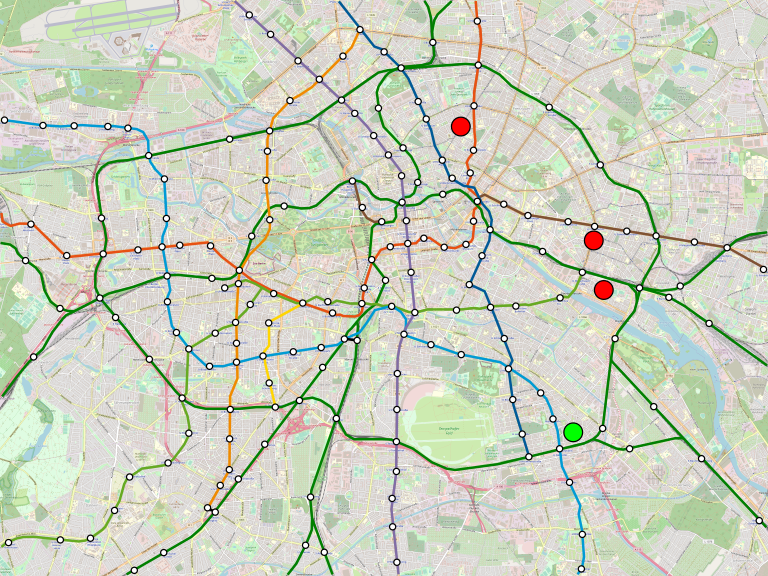
Without political parties, the people who can make informed voting in local elections – that is, the people who know the salient issues, the reasonable positions, and who will prioritize what – are from specific demographics. They must have very strong social ties within the locality – they may well know the candidates personally, or know people who know them personally. They must have lived in the locality for a long time to have had these ties. There is no way I could have these ties in Berlin – I moved here three months ago, and socialize largely with foreigners.
Even though there is universal vote among citizens (and even among EU citizens here), people who lack these ties may not be able to vote informedly. Thus, their (our) vote may be completely random; in Berlin I have enough of an idea of what the difference between the left-wing parties and CDU is on transportation, but the Green-SPD difference is still subtle and unless I see more in the next few years in advance of the election I’m likely to vote based on other cues, such as which party has a more diverse slate of candidates.
With people like me not really having much political power even when enfranchised, local politics becomes the domain of the specific socioeconomic classes that do have access to information. These are typically retirees and small business owners. If you own a store, you almost certainly know all the little details of your neighborhood because that’s where your clients are located. If you work for a big business, your social network is much wider, as your coworkers are likely to commute from a wide variety of places, so even though your income is similar to that of the shopkeeper you are much weaker in local elections.
With much more power than the rest of the electorate, retirees and the petite bourgeoisie can create a political culture in which their situation is considered more moral than that of the rest – hence the use of the word transient as a pejorative.
The relevance to housing and transportation is that people with mostly local ties tend to be consistently NIMBY. They usually own housing rather than rent – if you live in one place for a long time you benefit from owning more than the average person. They have real local political power, which redevelopment may disrupt by introducing a large cohort of new people into the neighborhood. They have the ability to extort developers into providing community amenities in exchange for getting a building permit. Not for nothing, the vanguard class for YIMBY is working-age people who work for other people and have national social ties rather than local ones.
In transportation, too, the favored classes in local politics with a democratic deficit tend to be pro-car. Part of it is that enfranchised voters drive more than the disenfranchised – in the United States (per census data) and the Netherlands, immigrants drive less and use transit more than natives. Even within the electorate, the groups that have higher turnouts, such as comfortable retirees, drive more than groups that have lower turnouts, such as students. The petite bourgeoisie in particular drives a lot – if you own a store you probably drive to it because your store is on a local main street with a single bus line, whereas salaried workers are likelier to work in city center and take transit. The latter are less empowered in local politics, especially American politics, so their preferences count less than those of people who can show up to meetings during business hours and complain about bus lanes.
Democratic consensus, not democratic deficit
Tories like to use the real problem of democratic deficit at the EU level as well as the local level to argue in favor of strong unitary nations. But there are better democratic mechanisms than voting for a party once every four or five years and letting an internal party hierarchy decide everything in the interim.
Germany and Canada have strong democratic institutions at the state/province level as far as I can tell, Germany through a multiparty system and Canada through provincial parties. Canadian leftists like to complain about Rob Ford and Doug Ford, but the voters of both Toronto and Ontario knew what they were voting for. It’s not like when Donald Trump ran on promises about immigration and trade that he couldn’t keep and then cut corporate taxes.
There are glimpses of real democracy in the largest cities, at least the mayoral level: Rob Ford, Bill de Blasio, Sadiq Khan, Anne Hidalgo. This is not every city of that size class (Chicago has no such institutions), but mayors of large enough cities can at least be familiar to large enough swaths of the electorate that more than just retirees, retail landlords, and small business owners can express an opinion. In smaller cities, it may be completely impossible to have such democracy – too many residents work outside the city, or work in the city alongside suburban commuters.
Forced amalgamations of cities are likely required in the US as well as France, on the model of Britain, Sweden, the Netherlands, or any other European country with postwar municipal consolidation. Below a certain size class, moreover, it is not possible to have a professional full-time legislature; smaller US states have very small districts (New Hampshire has 400 Representatives for 1.3 million people, paid $100 a year each), leading to hobbyist legislators and bills written by lobbyists.
Referendums are an important component of democracy as well, provided precautions are undertaken to ensure they are more like Swiss ones and less like Californian ones. It is appropriate to vote on individual spending packages, such as a high-speed rail project or a subway, by a simple majority; it is not appropriate to vote on part of a project, as California did for high-speed rail, and put the remaining funding sources in a magic asterisk.
Democracy and housing
Even when homeowners are the majority, as in nearly every first-world country, there is no general interest in a housing shortage. Only homeowners in the most expensive and constrained areas as well as homeowners who look down on people who move frequently have this interest. These two groups can win thanks to a sustained democratic deficit on the local level.
This is why higher-level decisionmaking is consistently more YIMBY than local decisionmaking. At the national or even state level, homeowners can easily form a housing cartel and restrict construction – and yet, higher-level decisionmaking, such as in Japan (national) or Canada (provincial) is associated with higher construction rates. At the state level, interest groups like that of NIMBY homeowners have to share power with other interest groups, including middle-class renters, organized labor, and real estate; in California the NIMBYs just scored a win thanks to control of a legislative committee, but a full legislative vote might well go the other way. But at the local level, the NIMBYs have stronger local ties than the rest and can keep outsiders out, and even manipulate local interest groups, offering them scraps of the extortion money from developers in exchange for loyalty.
In accordance with the observation that higher-level decisionmaking yields YIMBYer results, France and Sweden have recently accelerated housing construction in their expensive capitals, both by force of national power. In the 2014 election, party posters on Stockholm pledged to build more housing, and after winning the election, the Social Democrats set a target for national housing production. Local NIMBYs still maintain some power in that housing production in Sweden has come from finding new brownfield sites to redevelop rather than from replacing smaller buildings with bigger ones, but construction rates in the last few years have been high, especially in Stockholm County; The Local describes the overall rental situation in Sweden as “cooling.” In France there has been acceleration in housing production as well, powered by both national and regional concerns, over the objections of rich NIMBY suburbs over social housing mandates.
The United States has continued devolving housing decisions to hyperlocal organs, with predictable results. YIMBYs in California may not have fully theorized this, but they understand the implications enough to focus on getting the state to override local control to permit mid-rise transit-oriented development. Whatever reasoning has led to this, the praxis of state preemption is solid, and activists in the United States should work to weaken local governments until and unless they begin solving their democratic deficit problems.




 where a and b are empirical parameters depending on walking speed and other relevant variables.
 Pedestrian Observations