The Soviet Bloc Way of Building Rapid Transit
Based on positive feedback from Patreon backers, I am expanding my post about the American way of building rapid transit into a series covering various national traditions. The Soviet bloc’s tradition is the most globally widespread, as Soviet advisors trained engineers in the USSR’s entire sphere of influence, ranging from just east of the Iron Curtain to North Korea. It is especially fascinating as it evolved independently of Western and Japanese metro-building traditions, from its origins in Moscow in the 1930s.
Like the American tradition, the Soviet tradition has aspects that are worth emulating and ones that are not. But it’s useful to understand where the design aspects come from. It’s especially interesting as Moscow has influences from London, so comparing where the Russians did better and where they did worse is a good case study of adapting a foreign idea to a different national context. Similarly, China imported Russian ideas of how to build metro networks while making considerable adaptations of its own, and I hope to cover China more fully in a future post, discussing there too how the tradition changed in the transmission.
Technical characteristics
The Soviet way is characterized by four major features:
Wide station spacing: the average interstations on the systems in question are all long. Moscow’s is 1.7 km, and for the most part cities in the former USSR with metros have similar interstations; in this table, length is in the row labeled 1 and number of stations in the row labeled 3. This is also true of the metro systems in China and North Korea, but in the Eastern European satellite states it’s less true, with Prague and the newer lines in Budapest averaging not much more than 1 km between stations.
Very little branching: Soviet lines do not branch, with a small handful of exceptions. Moscow’s only branching line, Line 4, is unique in multiple ways, as it was redesigned with American influence after Nikita Khrushchev’s visit to the United States. Eastern European satellite state metros do not branch, either, in contrast with contemporary postwar Western European networks like those of Stockholm and Milan. China has more branching, albeit less than Western and Japanese systems of comparable scope.
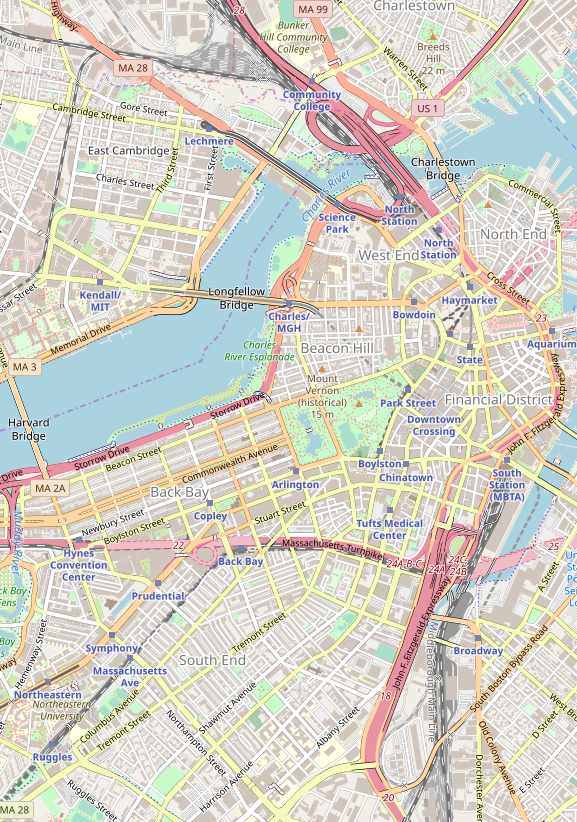
Radial network design: what I call the Soviet triangle, while not really a Soviet invention (it has antecedents in Boston and London), became a rigid system of network design in the communist bloc. Subway lines all run as rough diameters through the disk of the built-up area, and meet in the center in a triangle rather than in a three-way intersection in order to spread the load. Moscow adds a single circular line to the mix for circumferential travel, subsequently refined by a second and soon a third ring. Here, China diverges significantly, in that Beijing has grid elements like parallel lines.
Deep boring: Soviet and Soviet-influenced metro networks run deep underground. Traditionally, there was limited above-ground construction, for reasons of civil defense; in Moscow, only Line 4 is shallow, again due to American influence.
London’s long shadow
The decision to deep-bore the Moscow Metro was undertaken in the 1920s and 30s, long before the Cold War and the militarization of Soviet society. It even predates the turn to autarky under Stalin; as Branko Milanovic notes, the USSR spent most of the 1920s trying to obtain foreign loans to rebuild after the Revolution, and only when foreign capital was not forthcoming did it turn to autarky. The NKVD arrested the British advisors, conducted show trials, and deported them for espionage in 1933; the basic technical characteristics were already set then.
In London, the reason for deep boring is that the city has one street wide and straight enough for a cut-and-cover subway, Euston Road hosting the Metropolitan line. In Moscow, such streets are abundant. British planners were exporting both the idea of constructing wide throughfares based on modernist planning principles and that of deep-boring metro lines, an invention based on the context of a city that lacks such throughfares.
The network design bears similarity to what London would have liked to be. London is not as cleanly radial as Moscow, but it clearly tries to be radial, unlike New York or Paris. In general, it’s best to think of the early Moscow Metro as like early-20th century London Underground lines but cleaner – stations spaced farther apart, more regular radial structure, none of the little quirks that London’s had to build around like the Piccadilly line’s since-closed Aldwych branch.
Transit and socialism
The Soviet method of building metros may have originated in British planning, but its implementation throughout the 20th century was under socialist states, in which there was extensive central planning of the entire economy. Decisions regarding who got to live in the cities, where factories were to be sited, what goods were to be produced, and which sectors each city would specialize in were undertaken by the state.
There are several consequences of this political situation. First, by definition all urban development was social housing and all of it was TOD. Housing projects were placed regularly in ever-expanding rings around city center, where all the jobs were. There was no redevelopment, and thus density actually increased going out, while industrial jobs stayed within central cities even though in the capitalist bloc they suburbanized early, as factories are land-intensive.
Of note, some of this central planning also existed under social democracy: Sweden built the Million Program housing in Stockholm County on top of metro stations, creating a structure of density enabling high transit ridership.
But a second aspect is unique to proper communism: there were virtually no cars. Socialist central planning prioritized capital goods over consumer goods, and the dearth of the latter was well-known in the Cold War. At the same time, modernist city planning built very large roads. With no cars to induce people to fight for livable streets nor anything like the Western and Japanese New Left, urban design remained what today we can recognize as extremely car-oriented, before there were any cars. Major Eastern European cities are thus strongly bifurcated, between ones where a centrally planned metro has ensured very high per capita ridership, like Prague, Budapest, and Moscow (and also Bratislava, with trams), and ones where as soon as communism fell and people could buy cars the tramway network’s ridership cratered, like Tallinn, Riga, and I believe Vilnius.
The third and last aspect is that with extensive central planning, the seams that are visible in cities with a history of competition between different transit operators are generally absent. The incompatible gauges of Tokyo and the missed connections of New York (mostly built by the public-sector IND in competition with the private-sector IRT and BMT) do not exist in Moscow; Moscow does have missed connections between metro lines, but not many, and those are an awkward legacy of long interstations.
Of note, the autocratic aspects of socialism do not come into play in Soviet metro design. One would think that the Stalinist state would be able to engage in projects that in democracies are often unpopular due to NIMBYism, such as cut-and-cover subways, but the USSR did not pursue them. China does build elevated metro lines outside city centers, but evidently its plans to extend the Shanghai Maglev Train ran into local NIMBYism. People complained that the separation between the tracks and adjacent buildings was much less than in the German Transrapid standards; the Chinese state’s credibility on environmental matters is so low that people also trafficked in specious concerns about radiation poisoning.
The role of regional rail
The European socialist states all inherited the infrastructure of middle-income countries with extensive proto-industry – in particular, mainline rail. Russia had even completed the Trans-Siberian Railway before WW1. The bigger cities inherited large legacy commuter rail networks, where they operate commuter EMUs.
But while there are many regional trains in the European part of the former Soviet bloc, they are not S-Bahns. There was and still is no through-service, or frequent off-peak service. Connections between the metro and mainline rail were weak: only in 2016 did Moscow start using a circular legacy railway as its second urban rail ring.
The situation is changing, and just as Moscow inaugurated the Central Circle, so is it planning to begin through-service on radial commuter rail, called the Moscow Central Diameters. However, this is early 21st century planning, based on Western European rapid transit traditions.
Does this work?
In the larger cities, the answer is unambiguously yes: they have high transit ridership even when the population is wealthy enough to afford cars. The smaller cities are more auto-oriented, but that’s hardly the fault of Soviet metro planning when these cities don’t have metro networks to begin with; the fault there concerns urban planning more than anything.
Three aspects of Soviet metro planning deserve especial positive mention. The clean radial structure best approximates how single-core cities work, and Moscow and the cities it inspired deserve credit for not wasting money on low-ridership tangential lines, unlike Mexico City or (at smaller scale) Paris. It’s not too surprising that the Soviet triangle in particular exists outside the Soviet bloc, if not as regularly as in Eastern Europe.
The second positive aspect is the use of headway management in Moscow. With no branching and high frequency, Moscow Metro lines do not need to run on a timetable. Instead, they run on pure headway management: clocks at every station count the time elapsed since the last train arrived, and drivers speed up or slow down depending on what these clocks show relative to the scheduled headway between trains. At the peak, some lines run 39 trains per hour, the highest frequency I am aware of on lines that are not driverless (driverless metro technology is capable of 48 trains per hour, at least in theory, and runs 42 in practice on M14 in Paris).
The third and last is the importance of central planning. All public transportation in a metro region should be planned by a single organ, which should also interface with housing planners to ensure there is ample TOD. If anything, one of the bigger failures of Soviet metro planning is that it did not take this concept all the way, neither integrating metros with regional rail nor building a finger plan.
In contrast with these three positive aspects, station design is lacking. As frequent commenter and Patreon supporter Alexander Rapp noted in comments, there are some cross-platform transfers in Moscow; however, the initial three lines do not have such transfers, and instead the transfers became congested early, creating the impetus for the Circle Line. The deep-bored stations are expensive: Line 4 was built cut-and-cover to save money, not out of some cultural cringe toward New York, and today Russia is looking at cut-and-cover stations as a way to reduce construction costs.
Moreover, the wide interstations are too clean. The Underground has long interstations outside Central London and short ones within Central London, facilitating interchanges; while London has eight missed connections, these result from seams on lines running alongside each other or on branches, and only one pair of trunks has no transfer at all, the Metropolitan line and the Charing Cross half of the Northern line. In contrast, the relentlessly long interstations in Moscow lead to more misses.



 Pedestrian Observations
